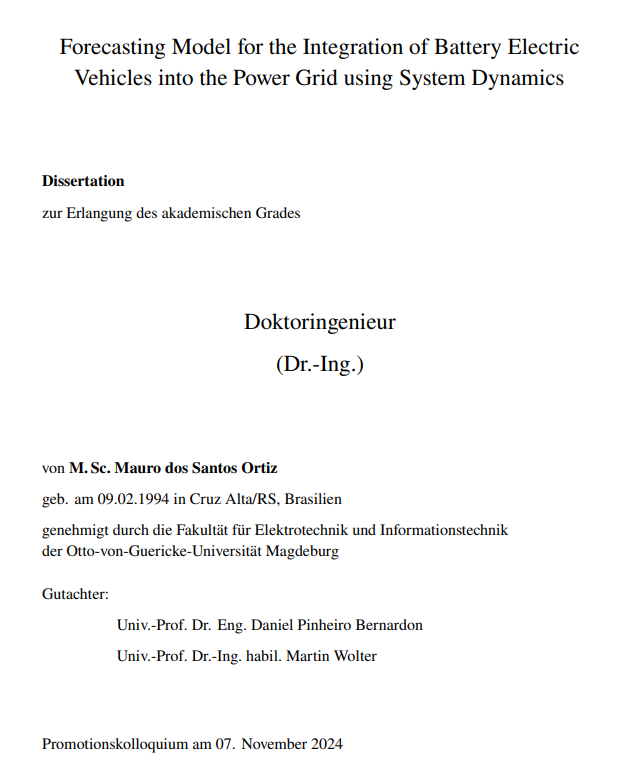
Forecasting model for the integration of battery electric vehicles into the power grid using system dynamics
DOI:
https://doi.org/10.24352/UB.OVGU-2024-097Keywords:
Elektrische Energieübertragung, Analytic Hierarchy Process, batterieelektrisches Fahrzeug, Fuzzy LogikAbstract
Growing discussions about the depletion of natural resources and the environmental risks arising from the extensive use of fossil fuels in the productive sectors are mobilizing public and private agents to rethink strategies for sustainable economic and social development. At the same time, various research projects are being conducted with a focus on generating energy from renewable sources and developing technologies and strategies for the efficient and intelligent use of energy. In the transportation sector, which is responsible for high emissions of greenhouse gases, electric vehicles ( EVs) are a promising alternative. The global market for EVs is currently booming, and the outlook is good for a decrease in acquisition costs, especially battery costs. It is also expected that the range of vehicles will increase and the charging infrastructure will improve. Moreover, the formulation of public policies and subsidies for the purchase of EVs represent major incentives for their adoption, especially by residential consumers. However, whether they buy an EV or not depends on the value judgment and subjectivity of each human being. In the literature, studies can be found, that discuss the penetration of EVs in a specific way and are restricted to a few variables. For this reason, the aim of this doctoral thesis is to develop a global model for forecasting the diffusion of battery electric vehicles ( BEV s) among residential consumers, analyzing the variables that influence their decision-making. To do this, the system dynamics ( SD ) technique is used together with the Bass model, considering quantitative and qualitative aspects of decision-making to determine the diffusion of BEVs over time. Additionally, the model encompasses the analytic hierarchy process ( AHP) and fuzzy logic to address the uncertainties and region-specific characteristics that influence BEV adoption. Case studies in Brazil and Germany demonstrate the model’s flexibility and accuracy in forecasting adoption trends and highlight the different impacts of public policies, infrastructure, market conditions, among others. In addition to the academic and scientific contributions, the developed model can support governments in formulating public policies to promote electric mobility. For companies in the energy sector, it provides important information for studies on the expansion of the electrical energy system. It also helps automotive companies align their sales strategies and expand their business models.
Downloads
Published
Issue
Section
License
Copyright (c) 2025 Res Electricae Magdeburgenses. Magdeburger Forum zur Elektrotechnik

This work is licensed under a Creative Commons Attribution-ShareAlike 4.0 International License.